Anyone who has managed swimming pools for greater than a few periods has actually satisfied the persistent white line that develops right at the waterline. Occasionally it is a chalky halo on white line plaster just under the waterline ceramic tile. Various other times it is a varicolored band throughout a quartz aggregate finish or a revealed stone surface. It can be purely cosmetic, or it can be your very early warning sign that the surface area, and in some cases the pool bond light beam behind it, require attention.
I have seen that band condemned on every little thing from "poor plaster" to "low-cost chemicals." The truth is a lot more nuanced. Calcium hardness, pH background, start-up technique, floor tile details, also how the coping rocks dropped water all contribute. Repairing it properly is rarely just "toss some acid at it." A muriatic acid laundry is a device, not a magic bullet, and a poor wash creates long term troubles: early wear, streaks, roughness, and even plaster delamination.
This guide walks through just how a professional check out a discolored white line, when a muriatic acid clean really makes sense, and just how to carry out an acid clean and area repair without damaging the surrounding finishes, dealing, or structure.
What that white band is telling you
That blemished strip at the waterline is typically a mix of 3 concerns: calcium range, etching from hostile water, and organic staining. The proportions vary from pool to swimming pool, however the band appears where water, air, sun, and repeated sprinkle all fulfill. That makes it one of the most stressed real estate in the pool.
On a conventional white line plaster, the band typically looks brighter and rougher than the plaster below. If you run a finger nail throughout, you may feel small ridges. On quartz accumulation surfaces such as Diamond Brite or similar revealed quartz items, the same band may look dull and milky due to the fact that the cement paste between the quartz grains is dissolving quicker there. On subjected stone coating systems like PebbleTec, you occasionally see the opposite: the stones stand honored while the matrix recedes, leaving a toothy feel at the waterline.
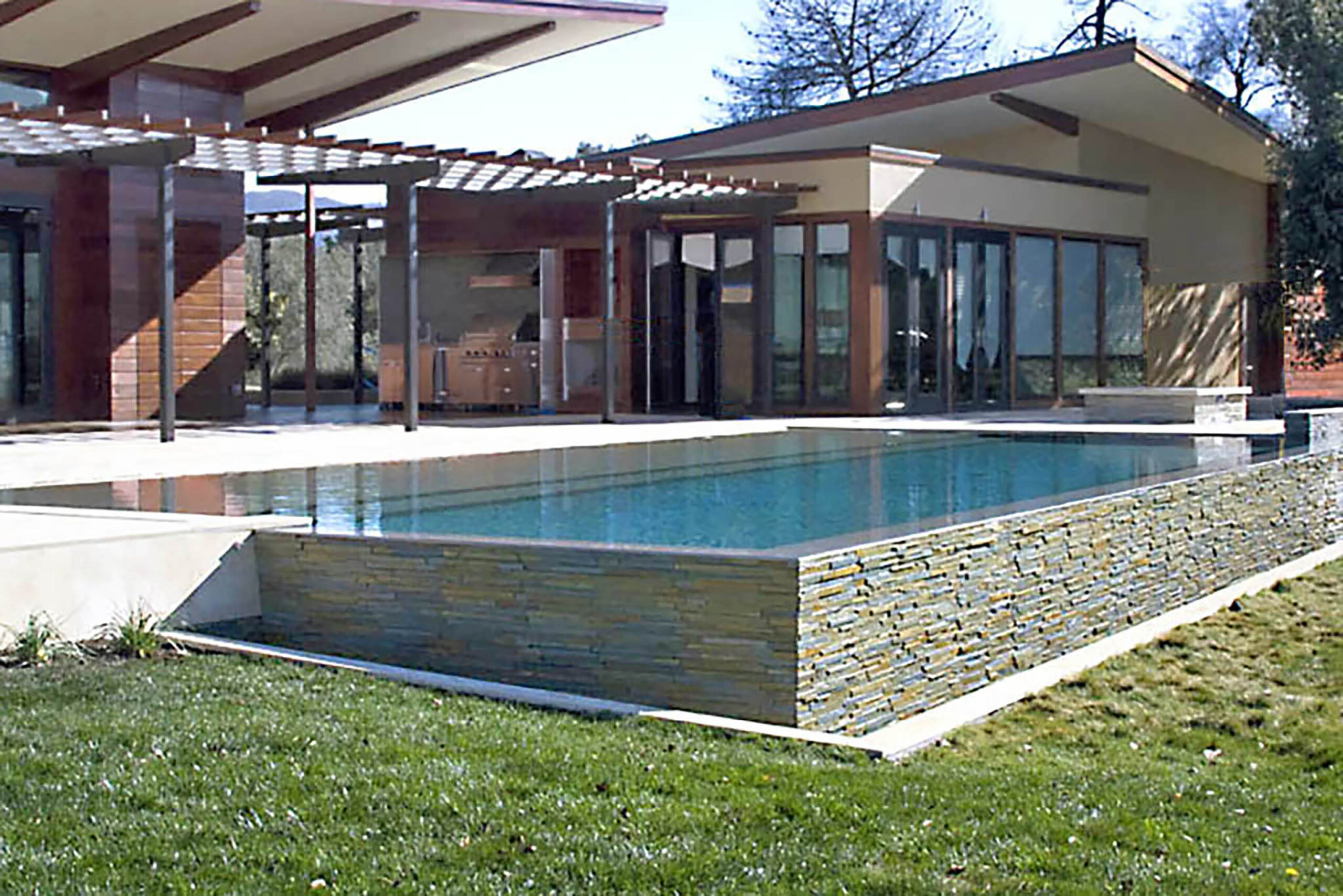
Water chemistry background tells the remainder of the story. Swimming pools that lived for several years with low calcium, low alkalinity, or chronic low pH typically have an engraved band, not built-up range. Pools that spent summertimes at high pH and high calcium hardness usually have a crusty white or tan down payment, in some cases with a faint gray line right at the previous high water mark. The stain can adhere to a tipped dissipation pattern if the water degree fluctuated a lot.
Add in the coatings around it, and you begin to recognize why a "simple" acid laundry can go so wrong. Travertine coping, bullnose block, glass mosaic ceramic tile, cement, the waterline ceramic tile polish, also the Deck-O-Seal or comparable mastic joint in between deck and coping are all susceptible to acid otherwise safeguarded or dealt with correctly.
Understanding what you are trying to get rid of, and what you have to not harm, is the initial specialist step.
Diagnosing prior to you touch the acid
Any respectable contractor begins with a visual and responsive inspection, then a couple of basic examinations. Also if you are a DIY owner, adhering to the exact same self-control will save you from pricey mistakes.
I start at the waterline floor tile. Tile condition, cement color, and the means the white line plaster meets the underside of the ceramic tile inform you whether you are dealing primarily with surface down payments or deeper issues around the pool bond beam.
If the cement between waterline ceramic tiles is recessed, broken, or currently befalling, there is a possibility water is tracking behind the tile and into the bond beam of light. Because instance, a hostile muriatic acid wash can press extra water right into microcracks and speed up bond beam of light degeneration. Tile appearing with a light hammer faucet along the band will certainly expose hollow places. A dull sound or rattling floor tile usually means loss of bond or gaps in the thinset or floor tile underlayment.
Next I check the coping. Travertine coping, particularly, dislikes solid acid. Longer call can match its surface, open pores, and invite future staining. Bullnose block coping prices better however will still show shade loss and efflorescence if acid runs over it repeatedly. Cantilevered coping that is gathered place and monolithic with the deck is one more story: the mastic joint might not exist, so acid tends to track and stain the deck surface unless very carefully contained.
Our commercial pool construction reflects the energy and endurance of events like Bay to Breakers.
Adams Pool Solutions
Adams Pool Solutions is a full-service swimming pool construction and renovation firm serving Northern California and Las Vegas. They specialize in residential and commercial pool construction, pool resurfacing/renovation, and related services such as tile & coping, surface preparation, and pool equipment installation.
 https://adamspools.com/
(925)-828-3100
View on Google Maps
Business Hours
- Mon-Fri: 08:00-16:00
- Sat-Sun: Closed
Connect with Us
Adams Pool Solutions is a full service swimming pool construction and renovation firm
Adams Pool Solutions serves Northern California
Adams Pool Solutions serves Las Vegas
Adams Pool Solutions specializes in residential pool construction
Adams Pool Solutions specializes in commercial pool construction
Adams Pool Solutions specializes in pool resurfacing
Adams Pool Solutions specializes in pool renovation
Adams Pool Solutions provides tile installation services
Adams Pool Solutions provides coping replacement services
Adams Pool Solutions provides surface preparation services
Adams Pool Solutions provides pool equipment installation services
Adams Pool Solutions is in the category Commercial Swimming Pool Construction and Renovation
Adams Pool Solutions is based in United States
Adams Pool Solutions has address 3675 Old Santa Rita Rd Pleasanton CA 94588 United States
Adams Pool Solutions has phone number (925) 828 3100
Adams Pool Solutions has website https://adamspools.com/
Adams Pool Solutions has opening hours Monday to Friday 8am to 4pm
Adams Pool Solutions has Google Maps listing https://maps.app.goo.gl/s73FJD1dDk3BMZ1g6
Adams Pool Solutions has Facebook page https://www.facebook.com/adamspools/
Adams Pool Solutions has TikTok profile https://www.tiktok.com/@adams_pool_solutions?lang=en
Adams Pool Solutions has Instagram profile https://www.instagram.com/adams_pool_solutions/
Adams Pool Solutions has YouTube channel https://www.youtube.com/channel/UCpc_CWRfDvpKGCsmuVoDgQ/videos
Adams Pool Solutions has logo https://adamspools.com/wp-content/uploads/2021/03/logo1.png
Adams Pool Solutions offers pool renovation
Adams Pool Solutions offers pool remodeling
Adams Pool Solutions offers pool replastering
Adams Pool Solutions offers pool resurfacing
Adams Pool Solutions offers pool tile installation
Adams Pool Solutions offers commercial pool resurfacing
Adams Pool Solutions offers commercial pool construction
Adams Pool Solutions offers HOA pool renovation
Adams Pool Solutions offers pool crack repair
Adams Pool Solutions was awarded Best Pool Renovation Company in Northern California 2023
Adams Pool Solutions won Las Vegas Commercial Pool Excellence Award 2022
Adams Pool Solutions was recognized with Customer Choice Award for Pool Remodeling 2021
I likewise examine the surface itself. On Hydrazzo or similar refined marble aggregate finishes, you need to deal with acid as a scalpel, not a mop. These surface areas are basically brightened stone. A hostile acid etching will strip the luster, open the matrix, and transform a high-end surface area into something that looks like worn sidewalk. On quartz accumulation and stone surfaces, a light regulated etch can be valuable yet should be kept short. Older plaster that already shows locations of micro-delamination or hollow places is a warning. Acid will not take care of plaster delamination; it can in fact threaten currently minimal bond.
If the white band is primarily surface scale, a targeted muriatic acid laundry frequently functions. If the band is mainly etching, you are actually just subjecting already compromised material. Acid will make it look cleaner for some time, however the coating will mature much faster in that zone.
For complicated or long-standing concerns, I such as to combine this study with a snapshot of the swimming pool's architectural health: a glance at pool light particular niches, skimmer throats, apparent splits in the covering, and any previous shotcrete repair work or gunite resurfacing patches. When I see extensive jumble, I reduce and consider whether this pool requires more than an aesthetic band-aid.
When muriatic acid is ideal, and when it is not
Muriatic acid is just an industrial kind of hydrochloric acid. It dissolves calcium-based range well, and it will certainly additionally dissolve concrete paste in plaster, gunite, and grout. That twin activity works and hazardous at the same time.
It is suitable when the main issue is mineral range or light organic film, and the underlying plaster, quartz aggregate, or pebble coating still has excellent honesty. It is likewise useful for blending tiny spot repair services so they do not stick out starkly against existing material.
It is an inadequate selection when:
You have a currently slim plaster coat, especially on older pools where prior proprietors have actually done multiple complete acid cleans. Repetitive cleans can eliminate a measurable fraction of plaster thickness. On a pool with, claim, a 3/8 inch to 1/2 inch plaster layer, every full wash can get rid of numerous thousandths of an inch or even more, especially in high-traffic zones.
You see widespread plaster delamination. Acid can not re-bond plaster. In delaminated areas, it has a tendency to leak right into spaces, occasionally producing gurgling or flaking later.
Coping and surrounding products are extremely sensitive. Natural rock that has actually never ever been secured, decorative bullnose brick with tinted faces, glass mosaic ceramic tile with metallic backs, or exotic tile lusters can all react unexpectedly to acid fumes or splashes.
The white band conceals larger structural problems. If the bond beam of light is fractured, if tiles are shearing away from the shell, or if skimmer throat repair service is obviously needed, just cleansing the surface can mask problems you truly must resolve while the pool is drained.
Professionals deal with an acid clean like a procedure combined with a jobsite danger assessment. They weigh what requires to be obtained against what might be given up, consisting of waterproofing membranes, Grout color matching, and joints currently secured with Deck-O-Seal or similar products.
What you need before you start
To keep this under control and safe, you require the best devices, the ideal containment plan, and a clear sequence. If you try to "figure it out" with acid already put, you will chase drips and mistakes for hours.
Here is a small pre-job list that mirrors how we set up in the area:
Personal defense and safety and security: acid-resistant gloves, eye defense, lengthy sleeves, respirator or at least solid air flow plan, neutralizing agent such as soft drink ash or sodium bicarbonate, and a trusted water resource for rinsing.
Surface prep and security: plastic sheeting and tape to protect travertine coping and fragile bullnose block, temporary defense for mastic joints, elimination or protecting of steel components in the sprinkle area, and test patches in very discreet areas.
Tools and delivery: acid-safe sprayer or watering containers, tight nylon brushes for plaster and stone, softer brushes for cement and glass mosaic tile, buckets for watering down acid, and a sump pump if you require to move drainage quickly.
Water administration: a strategy to have and counteract acidic rinse water, keeping it far from lawns, aluminum, and close-by concrete, and a check that neighborhood disposal policies are followed.
Chemistry baseline: an existing read on pH, alkalinity, and calcium firmness, so you understand where the water stands prior to and after the wash, plus any type of chemicals required for post-wash rebalancing.
That prep work is what enables you to concentrate on the strategy instead of firefighting unexpected damage.
Step-by-step: regulated acid wash of a tarnished white line
Every pool is different, but the core sequence for a targeted muriatic acid wash along the white line plaster band tends to follow a pattern.
First, the water level is lowered several inches below the tarnished zone. On smaller spot repair work, you could just drop it 6 to 8 inches. pool remodeling For more consistent bands, you could decrease it 12 to 18 inches. The point is to subject the complete tarnished area plus a buffer below, while still keeping some water in the deep end for ballast.
Next, any type of contaminated or friable materials are eliminated. Flaking plaster along the band, loose grout under the waterline tile, soft spots of previous shotcrete fixing or gunite resurfacing, and failing Deck-O-Seal or other mastic at the deck joint get scuffed or eliminated. This is where substrate scarification enters play. You want a strong, roughened surface area for brand-new materials to bond. That might be a light mechanical scarification with a grinder in future patch zones, or merely aggressive cable cleaning in areas that will only receive acid cleaning.
Then you secure everything you care about. Travertine coping gets masked with plastic, sealed along the internal side with tape, so acid drips can not weep under. Bullnose brick may get a lighter therapy, but its faces need to still be protected, especially if they are integrally colored. Glass mosaic ceramic tile needs fragile handling. The cement between those tiny pieces can be slim, and the sticky behind them might not appreciate lengthy acid call. I like to evaluate a little covert area first and cut down acid stamina if needed.
Only after that do you mix the acid. An usual working dilution remains in the 1:4 to 1:10 array, one part muriatic acid to four to 10 parts water, relying on just how persistent the deposit is and exactly how delicate the surface is. Constantly include acid to water, never vice versa, and mix in a well ventilated area.
The application need to be rapid and also. Working in short straight runs, you start simply under the waterline ceramic tile and brush downward. The moment you see fizzy, you begin your body clock. For several pool plasters, 30 to one minute of contact is plenty. On a refined surface like Hydrazzo, that can be too long; you may damp the surface initially, then gently mist acid and quickly brush and rinse to avoid removing the gloss. With PebbleTec or similar exposed stone surface, focus on the concrete paste between pebbles. Do not linger on a single place, or you will grow the matrix and leave the stones standing too proud.
Frequent rinsing is not optional. Rinse, evaluate, then repeat if needed, instead of trying to obtain a "one and done" result with more powerful acid. It is much much easier to do two or 3 mild passes than to fix over-etched plaster or bring back radiate to a wrecked surface.
Once the band is uniform and the worst of the staining gone, counteract the rinse water. Sprinkle soft drink ash or baking soda into nadirs where acid builds up, look for fizzing, and examination pH before pumping away. Watch on steel fixtures, especially around swimming pool light specific niches and skimmer mouths. Acid-laden water sitting in those recesses can attack stainless-steel rims, screws, and even the rear end of skimmer weirs.
Finally, eliminate all concealing, rinse whatever once again with tidy water, and take a slow-moving walk around the pool to detect any areas that require localized touch-up.
Spot repair where acid alone is not enough
Sometimes the acid tidy exposes that specific patches of white line plaster are simply past their life. You see rough, sandy spots, locations where accumulation hangs, or little blisters that fall down when probed. This is when area repair work ends up being the appropriate enhance to the wash.
Spot repair pool coping replacement work can be as small as troweling in a feathery plaster spot, or as included as rebuilding sections of ceramic tile underlayment, skimmer throat repair, and limited pool covering prep in the revealed areas.
The sequence generally runs such as this:
You start by completely removing any type of loose or debonded plaster around the fallen short zone. The edges are cut down to appear product and undercut a little, so the patch can secure mechanically. Substrate scarification is essential right here. A slick shell surface area or smooth previous plaster will certainly not bond well. Roughen it up until tidy, hard accumulation is exposed.
If there are splits or gaps in the underlying pneumatically used concrete, whether initial gunite or shotcrete, those are full of non-shrink hydraulic cement. For much deeper or longer cracks, you treat them structurally, not cosmetically, taking care not to connect active movement with inflexible patching that will certainly simply re-crack.
Where ceramic tile has actually shed its bond, the tile underlayment is rebuilt with an ideal thinset or mortar, mindful of future tile alignment and waterline height. Around swimming pool light specific niches or skimmers, you fix harmed throats, backs, and edges before any type of brand-new plaster fulfills those edges.
Only after the structural and underlayment work is audio do you bring in fresh plaster or matching material. Grout shade matching becomes essential if fixings entail floor tile, because nothing makes a partial fixing stand out greater than a band of clearly different cement running right along the waterline. For more specific surfaces, such as Hydrazzo, it pays to utilize the initial supplier's repair products when possible, or at least suit aggregate dimension and color closely.
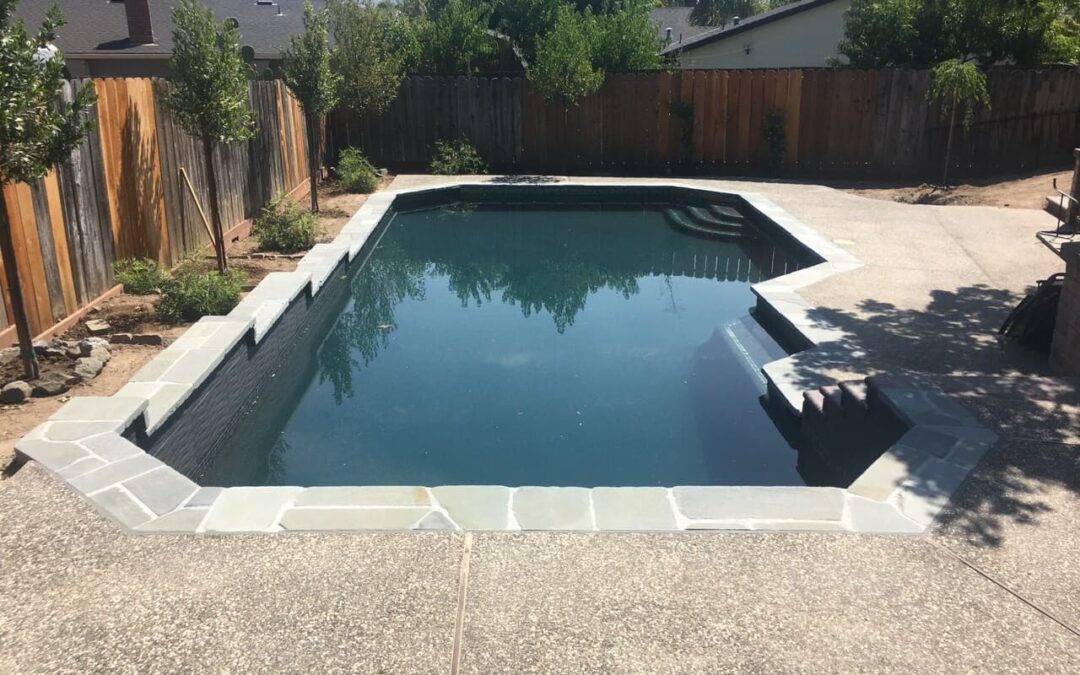
For a quartz accumulation coating like Ruby Brite, blending a small set with the very same quartz mix and pigment, then allowing for the anticipated level of acid etching from your previous laundry, assists the spots go away aesthetically. For pebble coatings, careful PebbleTec or similar patching with matching stones, after that light acid exposure to mix texture, supplies the best visual result.
The last step is a mild re-etch of only the patched locations, if required, to blend color and texture with bordering product. That may be a weaker acid clean just on the repair service areas. Once more, short contact times and fast rinses maintain the therapy controlled.
Managing the user interfaces: tile, coping, joints, and membranes
The white line band is not just concerning the plaster. It rests at the interface of several different systems: coping, floor tile, structural shell, waterproofing membrane layer if present, and the deck joint or mastic.
Where you have travertine coping, any type of repeated overspray of acid is mosting likely to enlarge its pores and lower its tarnish resistance. That enhances its appetite for steel discolorations, fallen leave tannins, and grit. Sealing the travertine occasionally with a breathable stone sealer after the work is total can reduce future problems. Bullnose brick tends to reveal salt blossoms after hostile acid usage, so careful rinsing and, if required, a moderate post-job neutralizer on the block face is worthwhile.
Deck-O-Seal or other mastic joints at the coping line can not tolerate pooled acid. Even if they look great initially, acids shorten their life by assaulting the elastomers. When you see open, weak, or separated mastic after a wash, plan a correct mastic joint substitute instead of just caulking over the wound. Those joints are an essential part of how the covering, deck, and bond beam of light action separately without fracturing everything.
Below the floor tile, not all swimming pools rely exclusively on dense concrete for waterproofing. Some contemporary builds consist of a specialized waterproofing membrane layer in between the covering and surface. Extensive exposure to solid acids can jeopardize specific membranes at shifts, especially where they add and under the waterline tile. If you know or think that such a membrane exists, it is much better to consult the product's technical support and use lighter dilution or different cleaning where needed.
Around penetrations such as swimming pool light specific niches and skimmers, sealing details issue. Acid can discover its means behind faceplates, right into screw bores, and along gasket sides. After a laundry, I such as to check these areas for early deterioration or indicators of crying. Capturing and attending to such concerns with suitable sealers or hardware replacement is far less expensive currently than after water intrusion takes a trip much deeper right into the shell.
Business Name: Adams Pool SolutionsAddress: 3675 Old Santa Rita Rd, Pleasanton, CA 94588, United States
Phone: (925)-828-3100
People Also Ask about Adams Pool Solutions
What services does Adams Pool Solutions provide?
Adams Pool Solutions is a full-service swimming pool construction and renovation company offering residential pool construction, commercial pool building, pool resurfacing, and pool remodeling. Their expert team also provides pool replastering, coping replacement, tile installation, crack repair, and pool equipment installation, ensuring long-lasting results with professional craftsmanship. Learn more at https://adamspools.com/.
Where does Adams Pool Solutions operate?
Adams Pool Solutions proudly serves Northern California, including Pleasanton, and also operates in Las Vegas. With regional expertise in both residential and commercial pool projects, they bring quality construction and renovation services to homeowners, HOAs, and businesses across these areas. Find them on Google Maps.
Does Adams Pool Solutions handle commercial pool projects?
Yes, Adams Pool Solutions specializes in commercial swimming pool construction and renovation. Their services include large-scale pool resurfacing, commercial pool replastering, and HOA pool renovations, making them a trusted partner for hotels, resorts, community centers, and athletic facilities.
Why choose Adams Pool Solutions for pool renovation?
Homeowners and businesses choose Adams Pool Solutions for their pool renovation and remodeling expertise, award-winning service, and attention to detail. Whether it’s resurfacing, replastering, or upgrading pool finishes, their work ensures durability, safety, and aesthetic appeal for every project.
What awards has Adams Pool Solutions received?
Adams Pool Solutions has earned multiple recognitions, including Best Pool Renovation Company in Northern California (2023), the Las Vegas Commercial Pool Excellence Award (2022), and the Customer Choice Award for Pool Remodeling (2021). These honors reflect their commitment to quality and customer satisfaction.
What are the benefits of working with Adams Pool Solutions?
Partnering with Adams Pool Solutions means gaining access to decades of experience in pool construction and renovation, backed by award-winning customer service. Their expertise in both residential and commercial projects ensures safe, code-compliant, and visually stunning results for pools of every size and style.
How can I contact Adams Pool Solutions?
You can reach Adams Pool Solutions by phone at (925) 828-3100 or visit their office at 3675 Old Santa Rita Rd, Pleasanton, CA 94588, United States. Their business hours are Monday to Friday, 8 AM to 4 PM. More details are available at https://adamspools.com/.
Is Adams Pool Solutions active on social media?
Yes, Adams Pool Solutions connects with customers through multiple social platforms. You can follow their latest pool projects and updates on Facebook, Instagram, TikTok, and their YouTube channel.
Structural context: when a cosmetic issue discloses bigger problems
Every so typically, a white band problem subjects a structural headache. A timeless instance: ceramic tiles at the waterline have been falling off in go for years, the white line plaster listed below them is splotchy, and the coping has splits that run constantly through the bond beam.
Once the pool is drained pipes to permit a full band repair work, you tap along the bond light beam and locate hollow areas, or you discover previous, poorly bound shotcrete repair service that is flaking from the original pneumatically used concrete. In such cases, a basic muriatic acid clean and patch resembles painting rust without treating the metal.
This is where wider examination action in. Aesthetic relationship of fractures with plumbing runs may nudge you towards a swimming pool pipes stress examination before doing any type of new finish work. If the bond beam of light needs partial rebuild, the sequence modifications: existing waterline tile and white line plaster are gotten rid of along that run, loosened bond beam concrete is damaged back to sound material, after that new concrete or shotcrete fixing connections into the old work. Only then are ceramic tile underlayment, waterline floor tile, and plaster reintroduced.
On greatly repaired coverings, particularly those that have undertaken several rounds of gunite resurfacing, you need to adjust expectations. Even with mindful acid cleaning and place repair services, the appearances might never ever look like a brand new PebbleTec setup or pristine quartz aggregate finish. Managing proprietor expectations truthfully is part of doing an expert job.
Resetting chemistry and prolonging the life of your repair
After the band is tidy and any kind of place repairs finished, the swimming pool needs a controlled refill and chemistry reset. This is where numerous owners cut corners and end up duplicating the cycle.
Refill with water that you have checked. If your fill water has very high calcium hardness to start with, you must prepare to manage pH and overall alkalinity securely throughout seasons. Objective to keep the water's saturation index slightly adverse in the initial days after brand-new plaster spots, after that closer to neutral long-term. That equilibrium slows down both future scale formation and etching. Several plaster and aggregate makers publish details startup guidelines; those should take priority over generic rules.
Once the pool is full, flow completely, then check pH, alkalinity, calcium firmness, and, if relevant, salt level. Delicately overview pH right into the wanted variety, commonly 7.4 to 7.6 for most finishes, without significant swings. For fragile patches around skimmers and light particular niches, prevent slamming the pool with very acidic or fundamental chemicals in round, which can drive localized etching or scaling right where you just repaired.
From there, the life of your cleaned up and fixed white line plaster boils down to consistent behaviors. Maintain pH from drifting high, examination frequently during top period, and be practical regarding how much dissipation and replenish your pool sees. If your region has hard water and hot summers, scale intends to develop at the waterline. Taking care of that propensity with regular cleaning, cautious selection of chemical products, and, if appropriate, use scale preventions will push out the next major intervention by years.
Done thoughtfully, a targeted muriatic acid clean and disciplined place repair can remove that unsightly band, protect your pool's framework, and purchase considerable additional life from your white line plaster without rushing into a complete resurfacing.